
Membrane patching
Compatible repairs to seams, punctures and localized field damage.
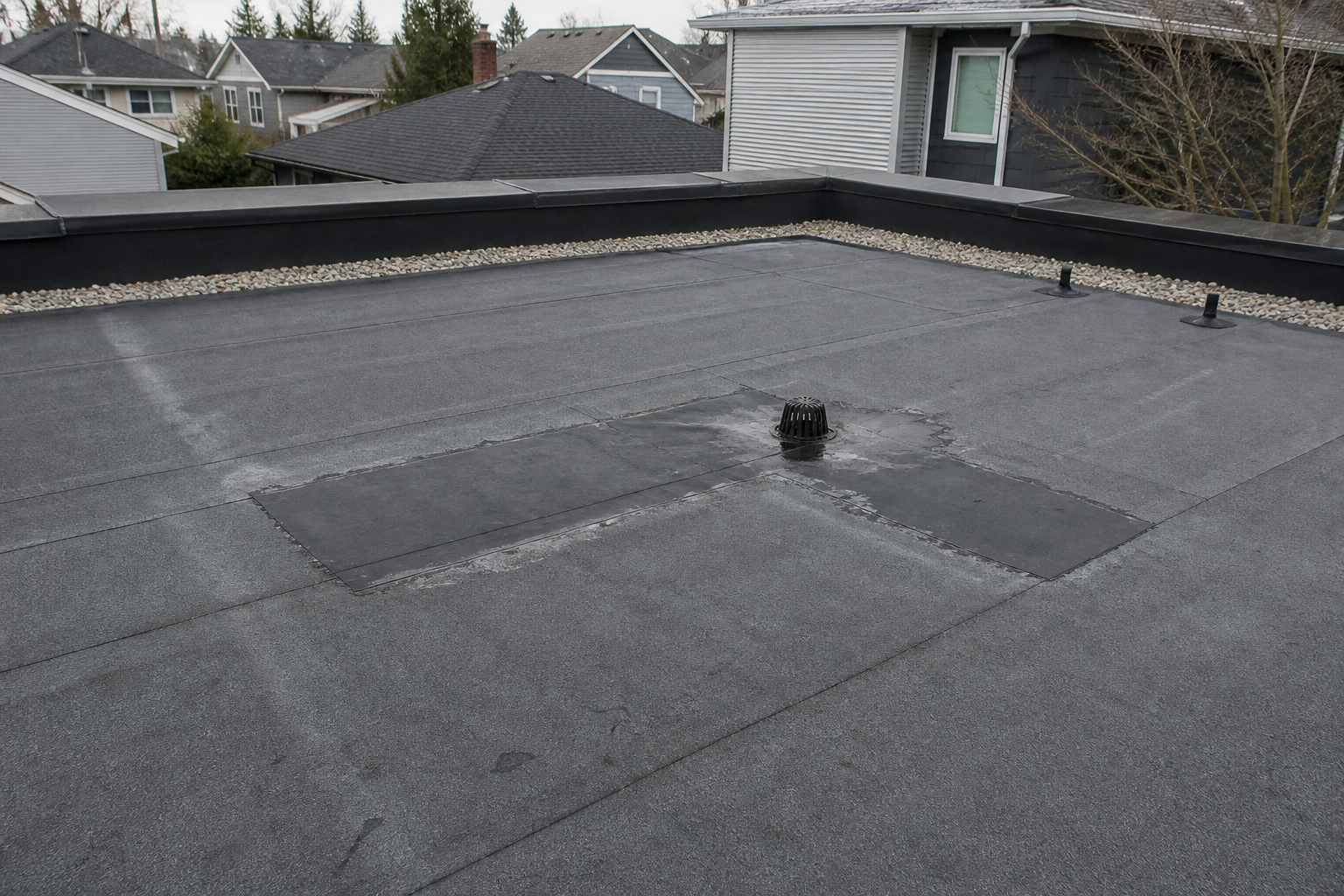
Low-slope membranes
SBS, torch-on, TPO/EPDM patching, flashing and penetration repairs on flat and low-slope roofs.
What is flat roof repair?
Flat and low-slope roof repair addresses membrane seams, flashings, penetrations and localized membrane failures without necessarily replacing the entire low-slope assembly.
Who this is for
Owners with ponding seepage, failed seams, curb leaks or open membrane areas on low-slope roofs.
Flat and low-slope roof repair addresses membrane seams, flashings, penetrations and localized membrane failures without necessarily replacing the entire low-slope assembly.
Assessment discipline
Membrane type
Patch compatibility
Drainage patterns
Penetration condition
Whether insulation is wet beyond local repair
Typical causes
Methodology
Process
Identify the membrane system and failure points
Moisture and drainage review around the damage
Written scope for compatible patching and details
Execute repairs with system-appropriate methods
Review drainage behaviour and document the work
Materials & systems
Compatible repairs to seams, punctures and localized field damage.
Restore waterproofing at rooftop openings.
Address details that hold water against weak points.
Metro Vancouver climate
Long wet seasons and ponding risk make seam and drain detailing critical on Lower Mainland low-slope roofs.
When this service is appropriate
When failures are localized and the membrane field can still accept durable patches.
When another service may fit better
Saturated insulation or system-wide seam failure usually means replacement planning.
When repair may make sense
Repair when the membrane remains broadly viable.
When replacement may make sense
Replace when the system is saturated or repeatedly failing.
Scope
The actual scope is established after assessment. Revolin Roofing does not publish a one-size-fits-all price, lifespan or assembly because those depend on the building and selected system.
Related services
Low-slope reroof
Complete residential or commercial low-slope reroof using SBS, TPO, PVC or other specified membrane systems.
Transitions and interfaces
Repair of chimney, wall, vent, pipe boot and other roof penetration flashings where water commonly enters Metro Vancouver roofs.
Active water entry
Priority leak diagnosis - same-day when scheduling allows - with temporary or permanent localized repair when water is entering a Metro Vancouver home through the roof assembly.
Condition first
Inspection, photographs, minor sealant or maintenance work and a roof condition report for informed planning.
Also useful
Questions
Flat and low-slope roof repair addresses membrane seams, flashings, penetrations and localized membrane failures without necessarily replacing the entire low-slope assembly.
Each membrane bonds differently: SBS is torch- or adhesive-applied modified bitumen, TPO is heat-welded, and EPDM relies on adhesives and tapes. A patch of the wrong material or method will not bond durably: misidentified patches are a common cause of repeat leaks.
Standing water that persists well after rain stresses seams, accelerates membrane aging and magnifies any small defect. Some causes are repairable - blocked drains, localized low spots - while structural slope problems point toward a replacement-level discussion.
Often yes, with method adjustments: some materials and adhesives have temperature limits, and surfaces must be dry. Emergency stabilization is nearly always possible; certain permanent details may wait for a suitable weather window.
Symptoms include persistent interior dampness, membrane blistering and soft or spongy areas underfoot; confirmation may need moisture scanning or test cuts. Wet insulation matters because patching over it traps moisture and continues the deterioration.
Related project evidence
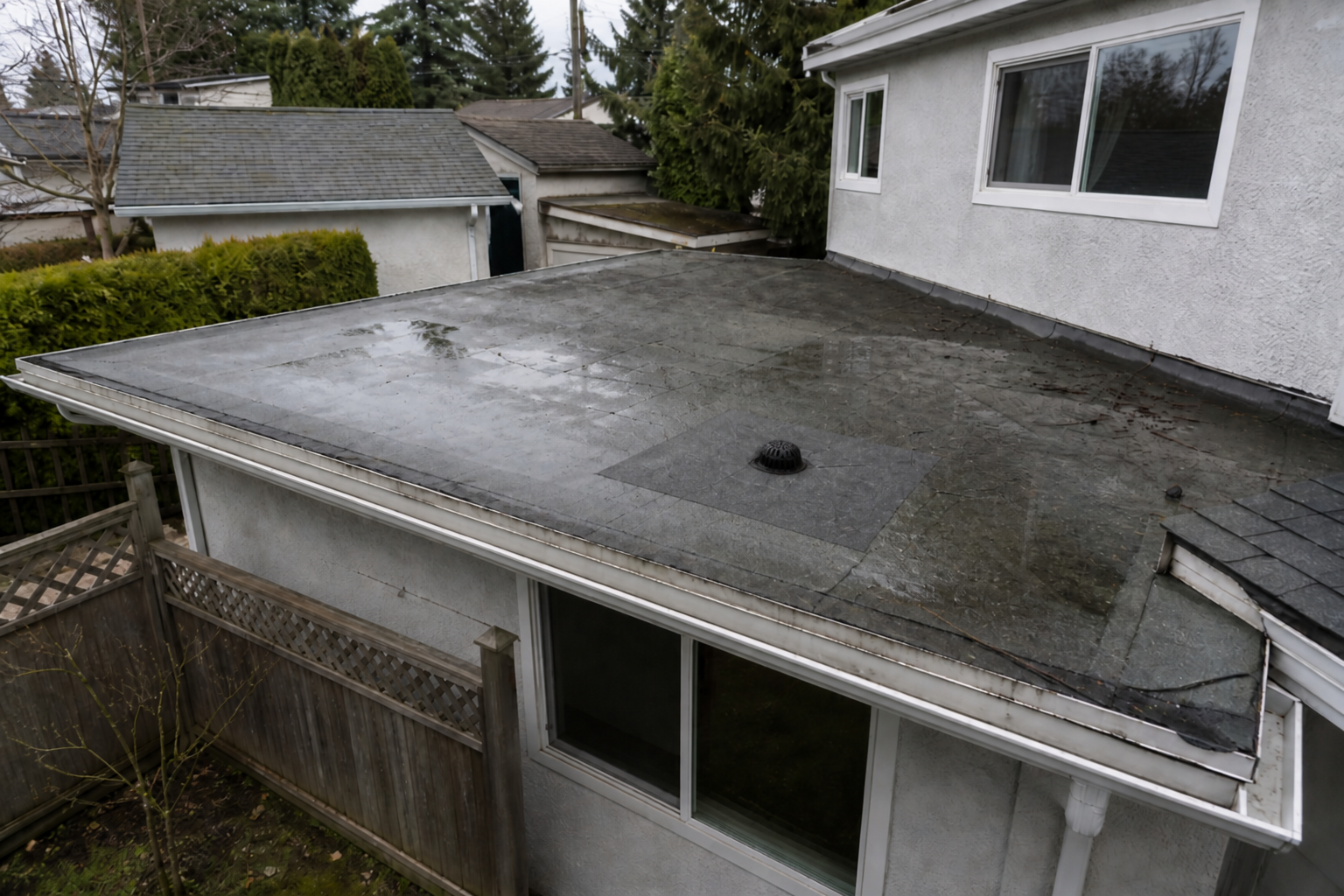
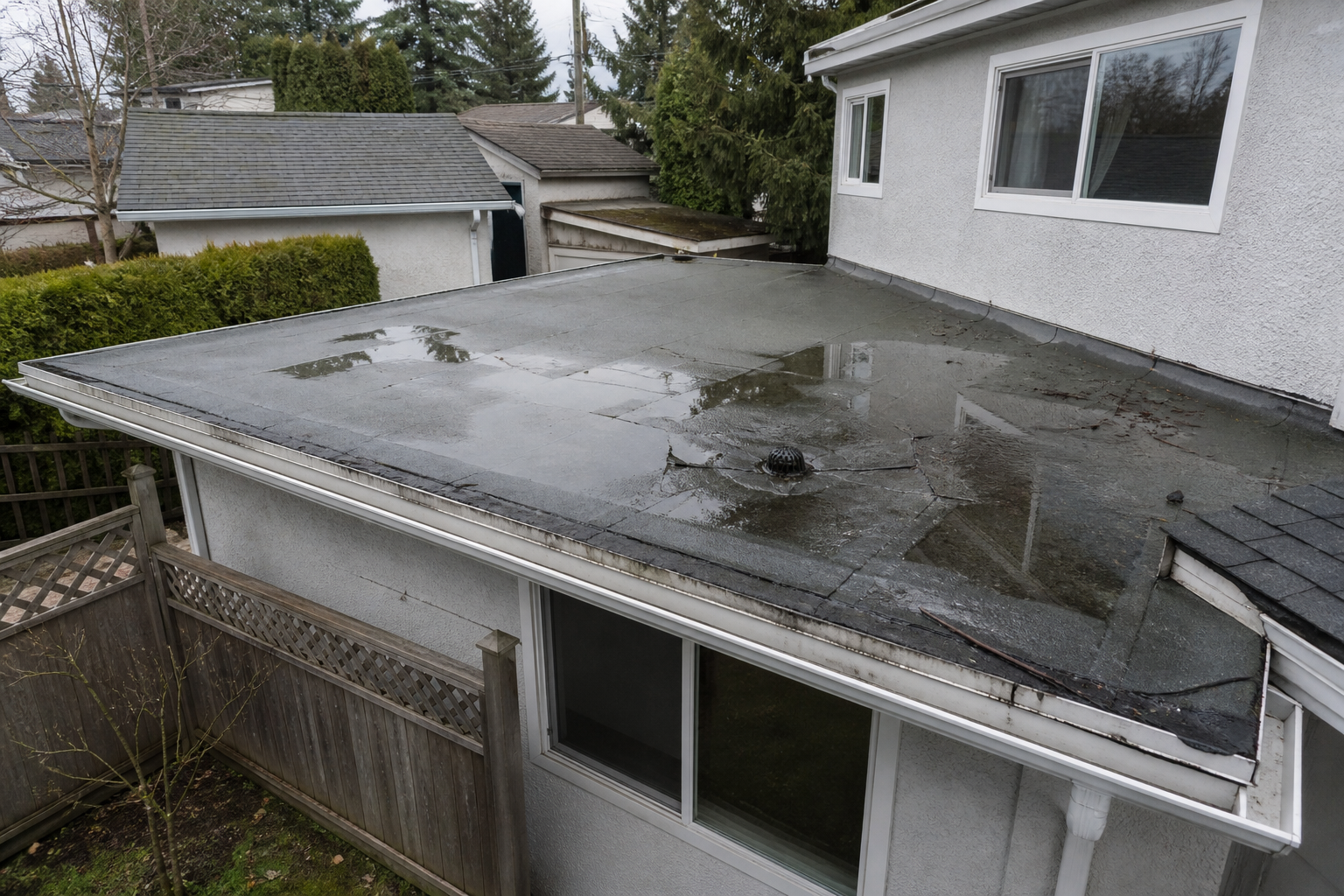
richmond · Low-slope membrane
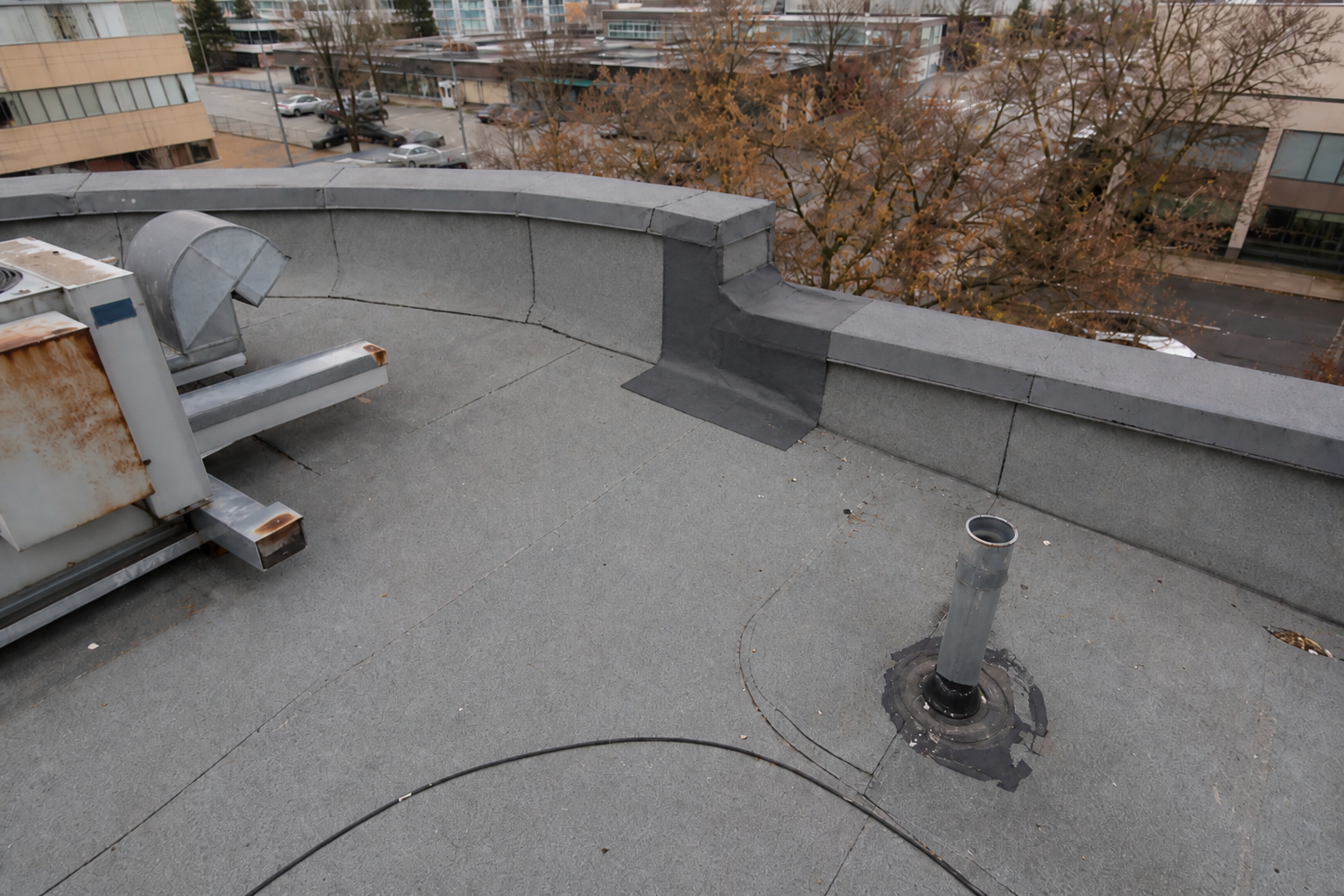
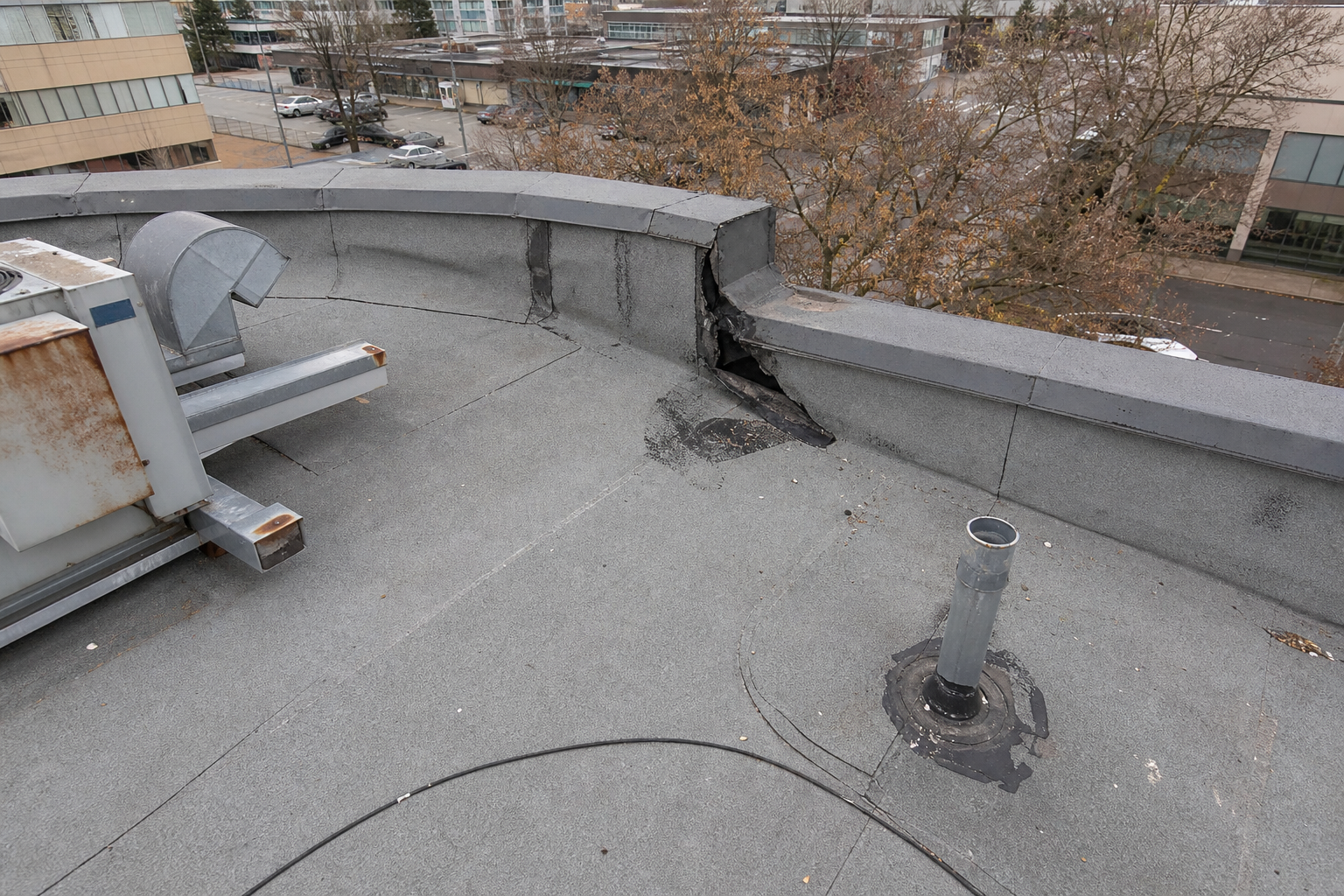
burnaby · Low-slope membrane
Next step
Tell us what you are seeing and where the property is. We will use that context to plan the right next conversation.
Call +1 (778) 851-0830