
Quick answer
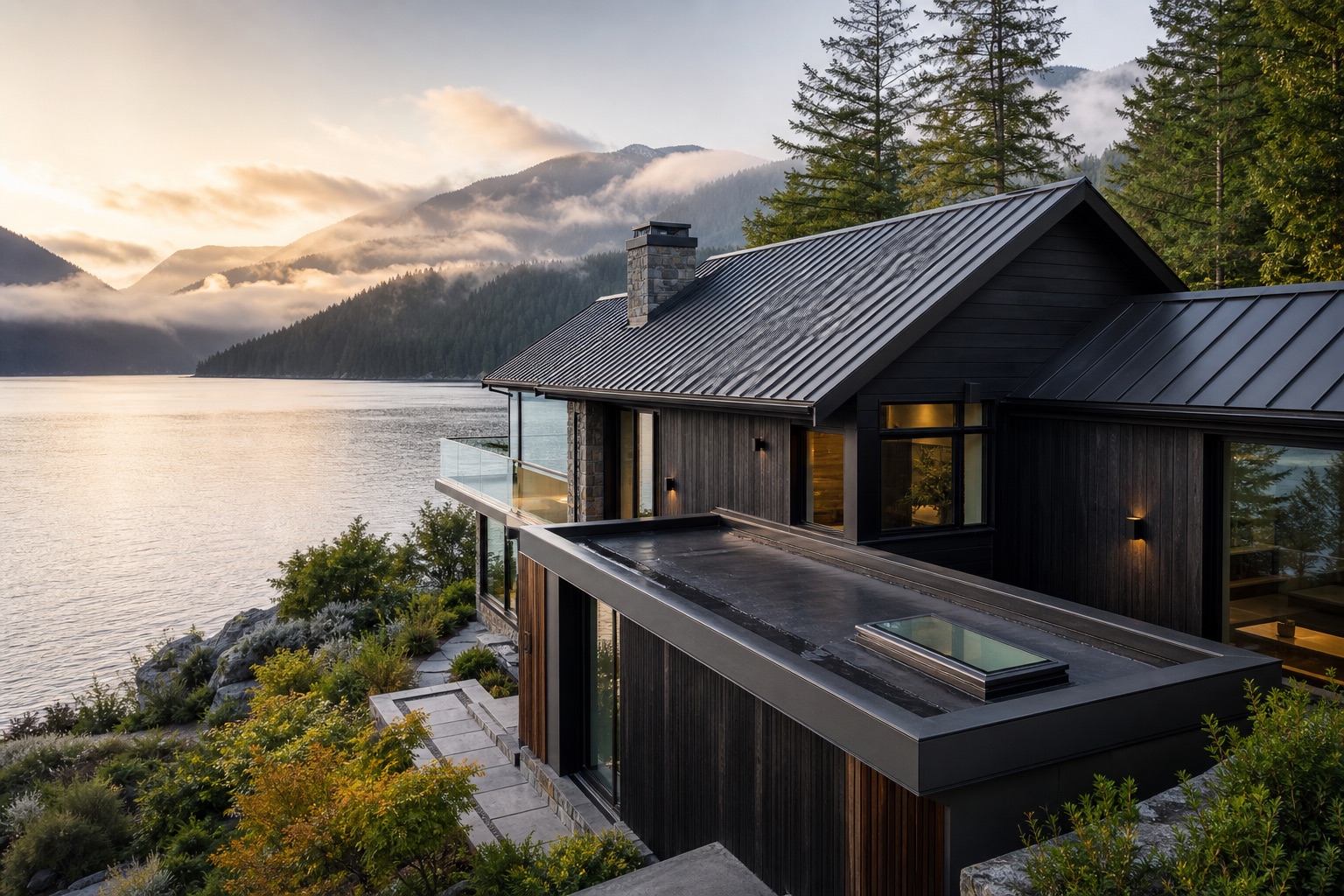
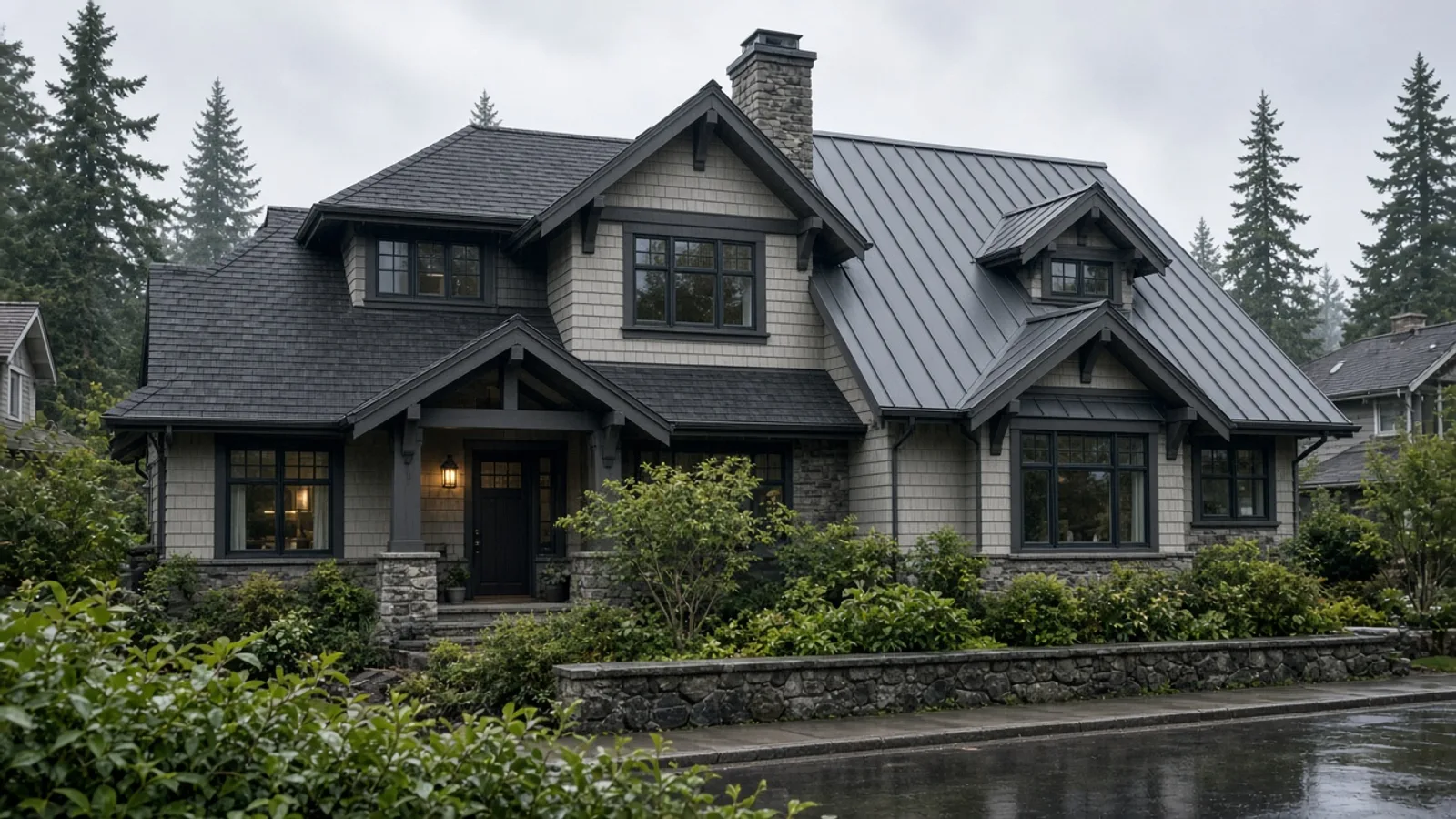
Asphalt shingles and metal roofing can both perform well when the complete roof assembly is properly designed and installed. Material choice should account for roof slope and geometry, existing deck condition, ventilation, underlayment, flashing, penetrations, drainage, architecture, budget, and maintenance expectations.
The roof is a system
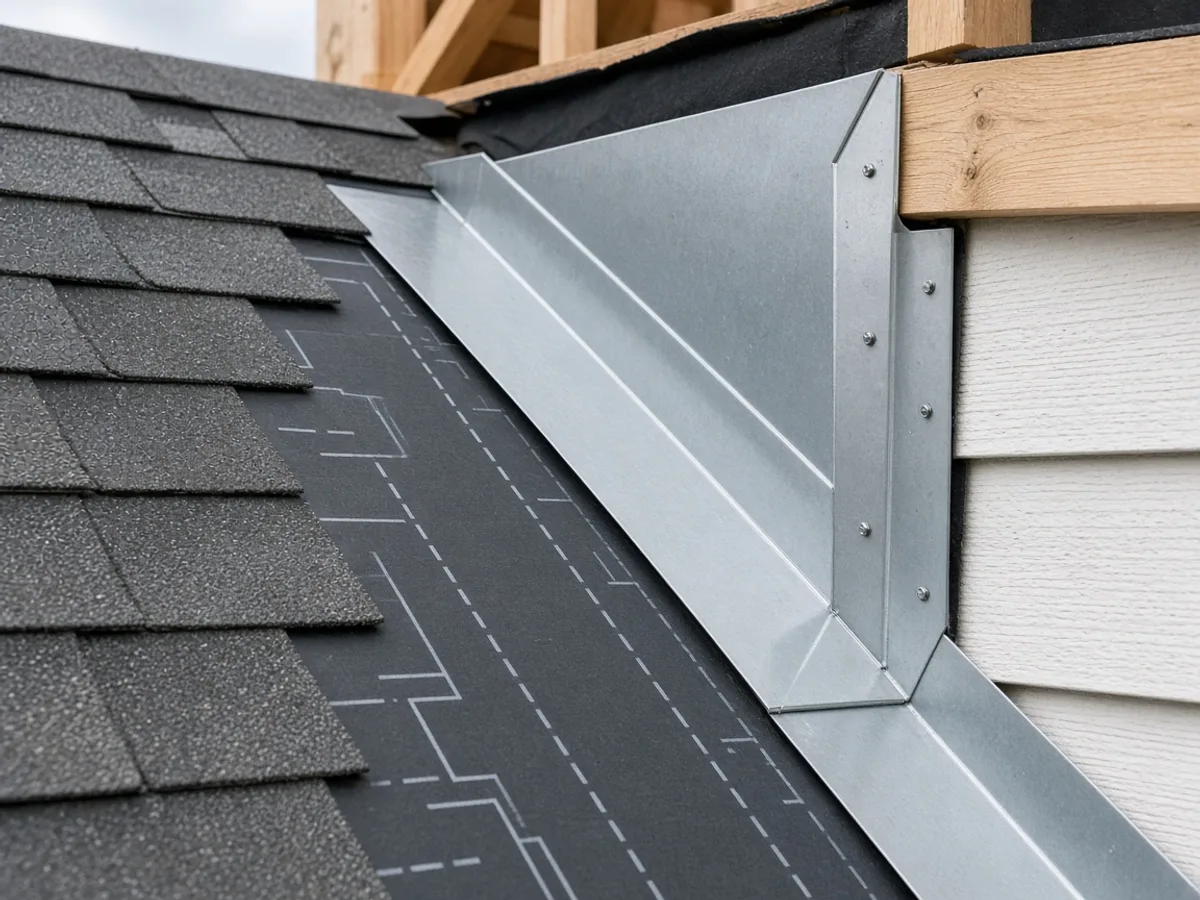
Leaks frequently occur at transitions and penetrations rather than in the middle of a simple field. Valleys, chimneys, skylights, wall interfaces, vents, edges, gutters, and flashing details deserve careful attention.
Replacement is a chance to inspect what is hidden
Removing old roofing allows the deck, previous repairs, ventilation paths, flashings, and water-damaged areas to be assessed.
Appearance changes the house
Metal profile, seam layout, colour, shingle exposure, edge metal, gutters, and roof complexity all affect curb appeal.
Choose installers for detailing, not just product
A premium material cannot compensate for poor transitions, fastener practices, flashing, or site protection.
What to prepare before requesting an assessment
Share the property location, photos, approximate dimensions, goals, and timing. Revolin Roofing uses that context to plan a useful on-site review.
When a site visit makes sense
System changes, uncertain deck condition, or mixed-slope geometry usually require seeing the roof before a written scope and price are issued.
Frequently asked questions
- Is metal roofing noisy in rain?
- Perceived sound depends on the roof assembly, insulation, attic, deck, profile, and interior conditions—not just the exterior material.
- Can metal roofing go over shingles?
- Some systems and jurisdictions may allow certain approaches, but existing condition, assembly design, manufacturer requirements, and applicable rules need review.
- Which is better for Vancouver rain?
- Both can perform well. Water-shedding design, underlayment, flashings, penetrations, drainage, slope, and workmanship are critical.